







The highly anticipated global release of Christopher Nolan’s epic action spectacle, The Odyssey, has gone beyond the box office. The travel industry is experiencing a surge in film tourism, with fans seeking to visit the filming locations seen on screen.
From the rugged coastlines of the Ionian Sea to the volcanic terrain of Iceland, audiences worldwide are planning their trips to experience firsthand the real landscapes featured in the hit film.

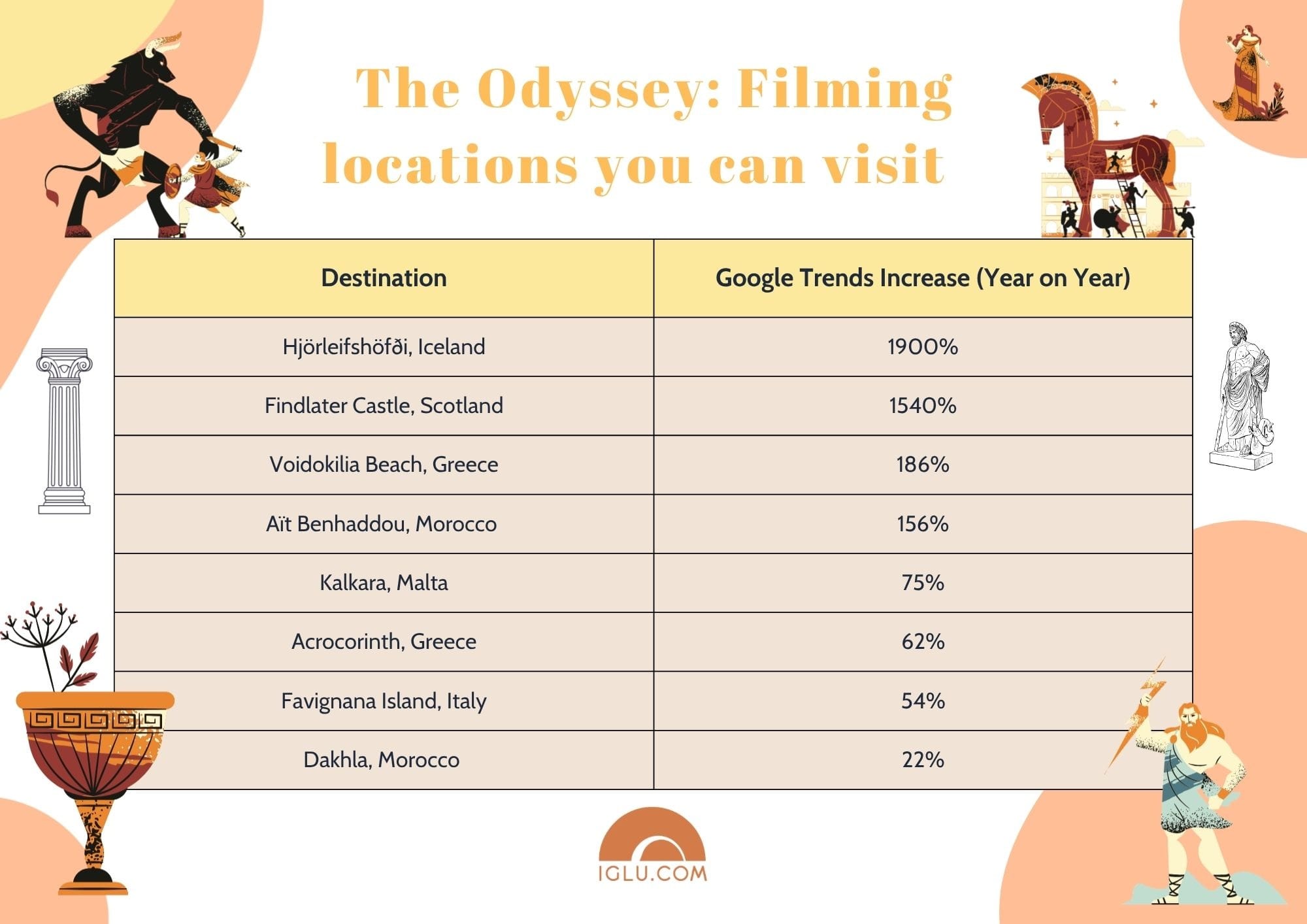
With that said, we have revealed the trending destinations featured in The Odyssey by comparing Google Trends data to identify which locations have seen the biggest surge in searches over the last year.
Contents:
- Hjörleifshöfði, Iceland
- Findlater Castle, Scotland
- Voidokilia Beach, Greece
- Aït Benhaddou, Morocco
- Kalkara, Malta
- Acrocorinth, Greece
- Favignana Island, Italy
- Dakhla, Morocco
1. Hjörleifshöfði, Iceland
Hjörleifshöfði is a 725-ft-high mountain standing isolated in Mýrdalssandur, South Iceland. It is located along Iceland's southern coast, roughly 2.5 hours' drive from the capital city, Reykjavík.
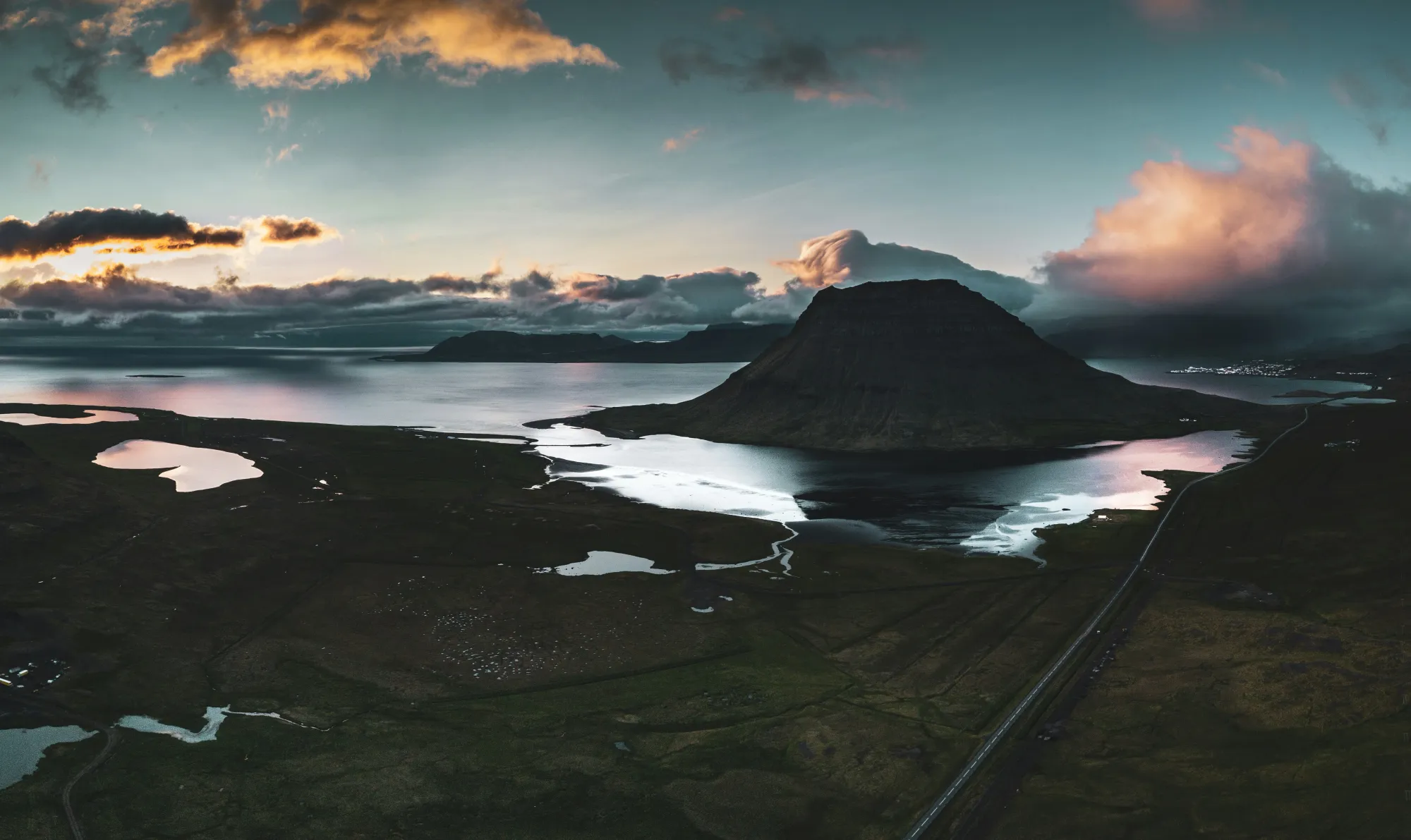
The mountain was used as a major filming location for Christopher Nolan's The Odyssey. The black sand plains, stark coastline, and natural rock caves around Hjörleifshöfði were transformed into Hades, the Land of the Dead.
It is thought that the location was chosen for its "underworld" aesthetic. The volcanic black sands of Mýrdalssandur, combined with moody sea mist, created a bleak, otherworldly landscape that Nolan was searching for.
Hiking to the summit rewards travellers with panoramic vistas of the North Atlantic Ocean and the Katla volcano's glaciated ice cap in the distance. While major tourist hubs along the South Coast are packed, Hjörleifshöfði remains surprisingly peaceful.
2. Findlater Castle, Scotland
Findlater Castle is a 14th-century ruined fortress perched on a 50-foot cliff jutting directly into the North Sea.
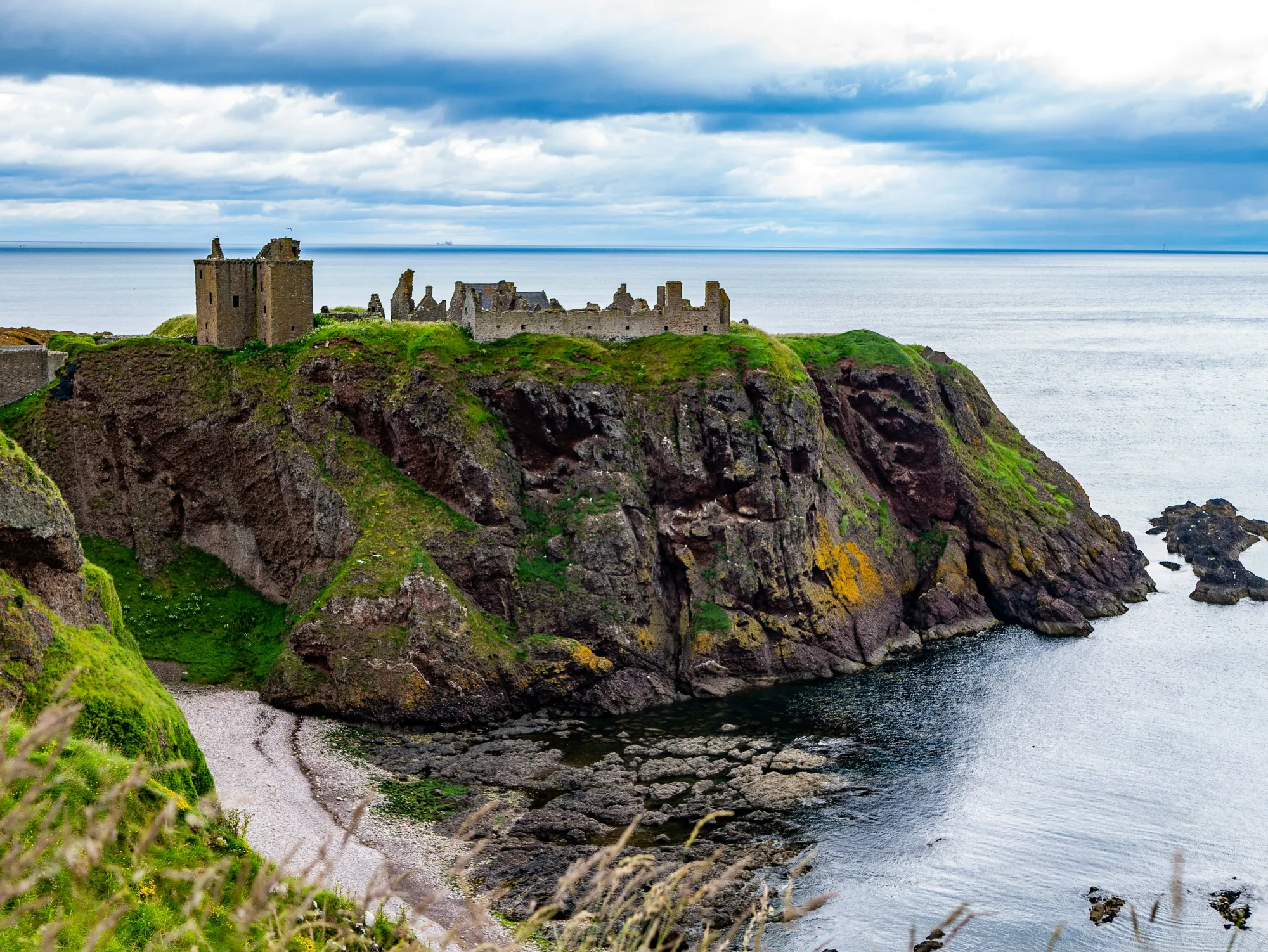
For The Odyssey, it was transformed into the coastal sanctuary of the sea witch Circe on the island of Aeaea. The surrounding rocky shorelines and Sunnyside Beach were used for the sequences where Odysseus and his remaining crew make landfall after escaping the Laestrygonians.
Due to its remote location, Findlater Castle naturally captures the feeling of an isolated, inaccessible island fortress. Unlike famous castles such as Dunnottar or Eilean Donan, Findlater rarely gets crowded. However, the path leading down from the cliffs onto the castle peninsula is steep and narrow, so sturdy hiking boots with good grip are recommended.
3. Voidokilia Beach, Greece
Voidokilia Beach, situated in the Messinia region of the southwest Peloponnese, is widely considered one of the most stunning natural beaches in all of Greece.
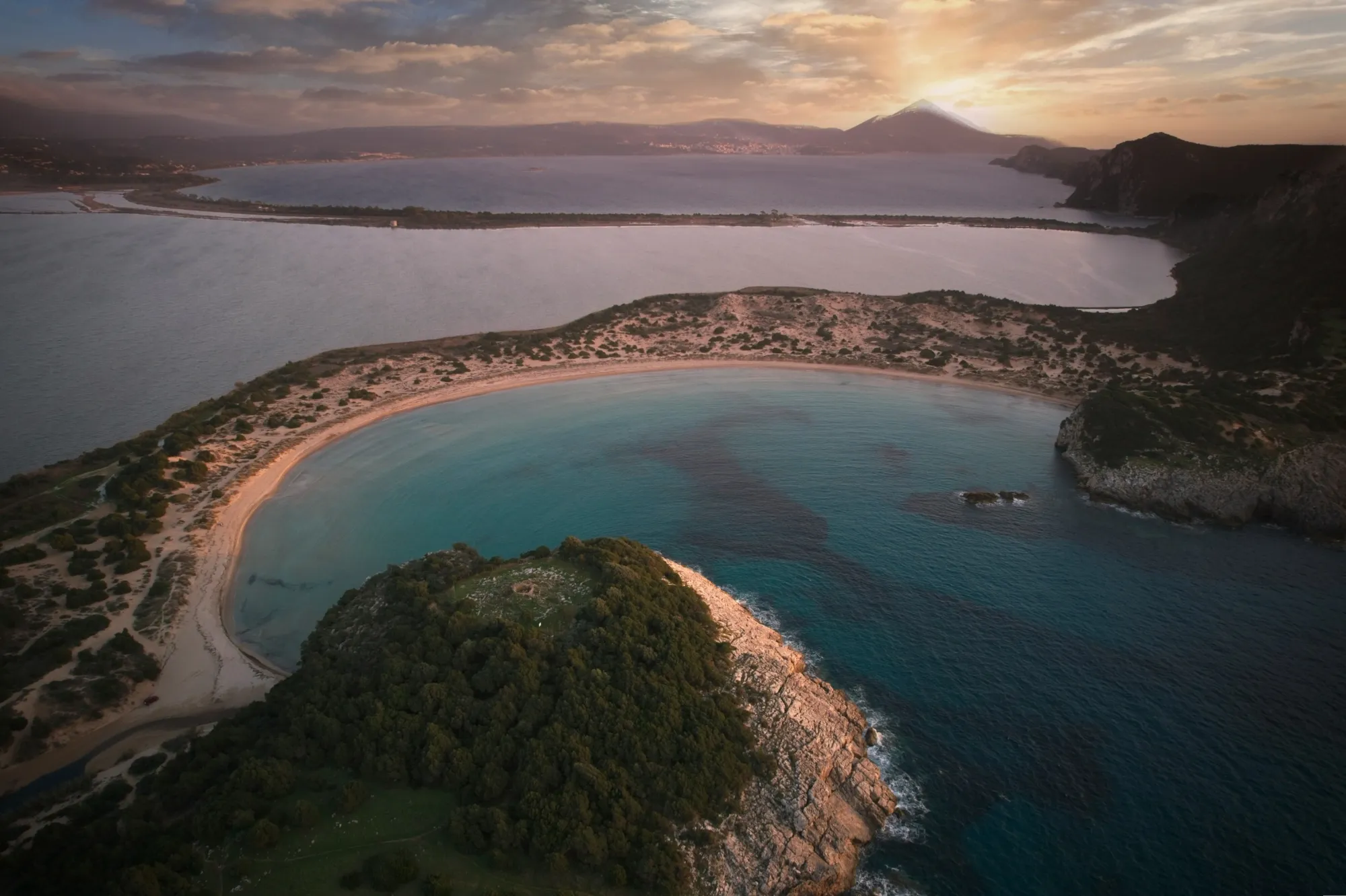
The beach, along with the cliffs directly above it, was used to film the exterior landing and entrance sequences for the Island of the Cyclopes. The rugged limestone cliffs surrounding the bay, specifically the path leading up to Nestor's Cave, were used for the tense climb during which the crew searched for livestock before becoming trapped by Polyphemus.
In local tradition and classical archaeology, Nestor’s Cave directly above Voidokilia has long been associated with Homeric legend. Shooting at the geographic site, rather than on built sets, helped make the production of The Odyssey feel more authentic.
As Voidokilia Beach sits within a protected area, it is totally undeveloped. There are no sunbeds, restaurants, or facilities. Bring plenty of drinking water, sun protection, and a beach umbrella if visiting.
4. Aït Benhaddou, Morocco
Aït Benhaddou is an 11th-century ksar located along the Sahara Desert and Marrakech in southern Morocco. Recognised as a UNESCO World Heritage Site since 1987, it is one of the best examples of traditional Moroccan clay architecture in North Africa.
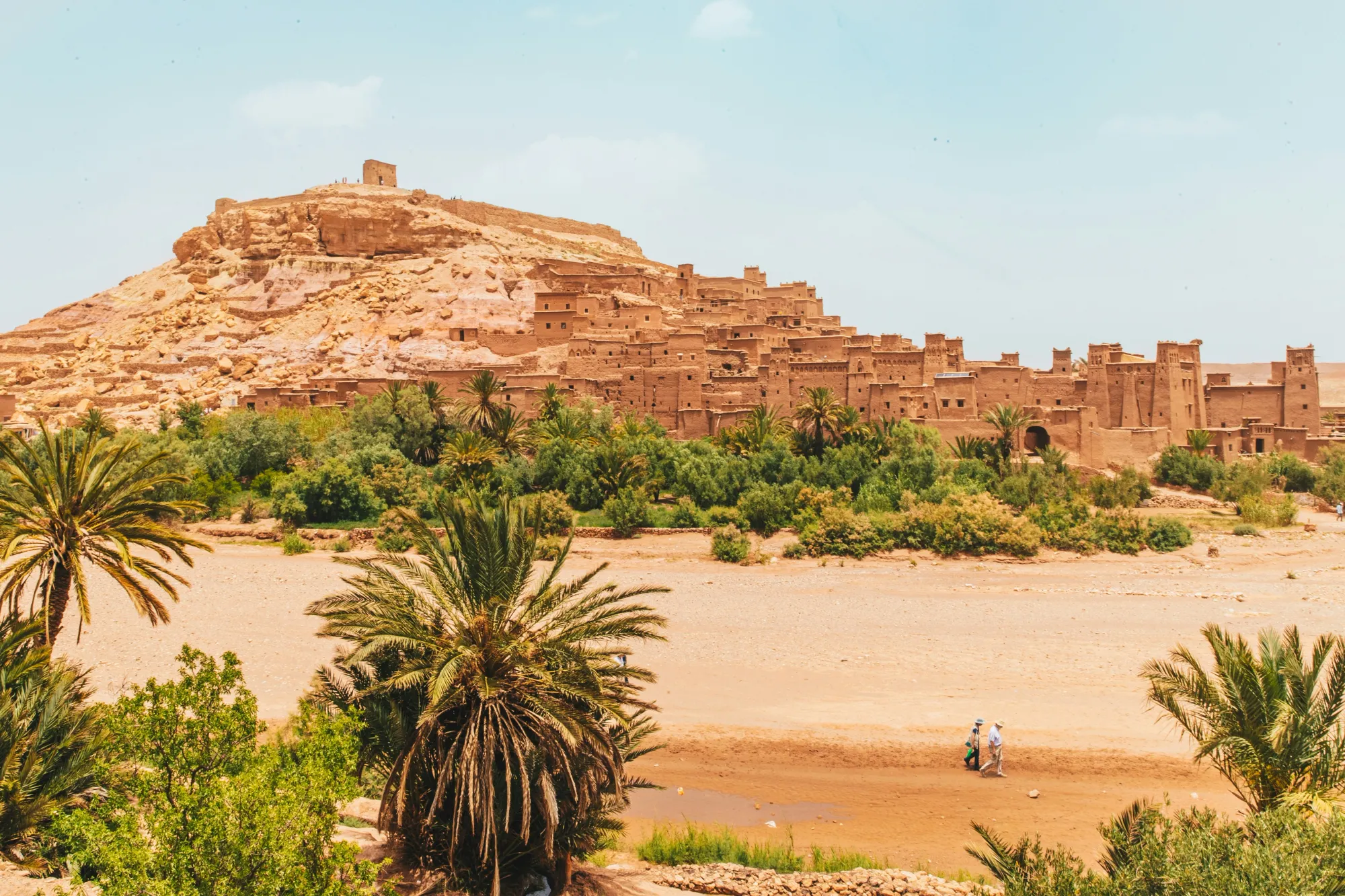
The village served as the principal location for the epic opening chapter of the film, the fall of Troy. The historic fortresses and surrounding defensive walls stood in for the outer fortifications and gates of ancient Troy, where Agamemnon’s Greek army lay siege to the city.
The narrow, winding clay alleyways within the fortified village provided the setting for chaotic combat, burning streets, and evacuation scenes as the city fell. Located near Ouarzazate, the location has a long history of hosting major historical epics such as Gladiator and Kingdom of Heaven.
The journey takes 3.5 hours on a scenic drive from Marrakech via the Tizi n'Tichka pass. While most residents have moved to modern houses in the new village on the opposite bank of the river, several families still live inside the ancient ksar.
5. Kalkara, Malta
Kalkara is a picturesque coastal village located in the South Eastern Region of Malta. It sits directly on the Grand Harbour, nestled across the water from Valletta and immediately adjacent to Birgu.
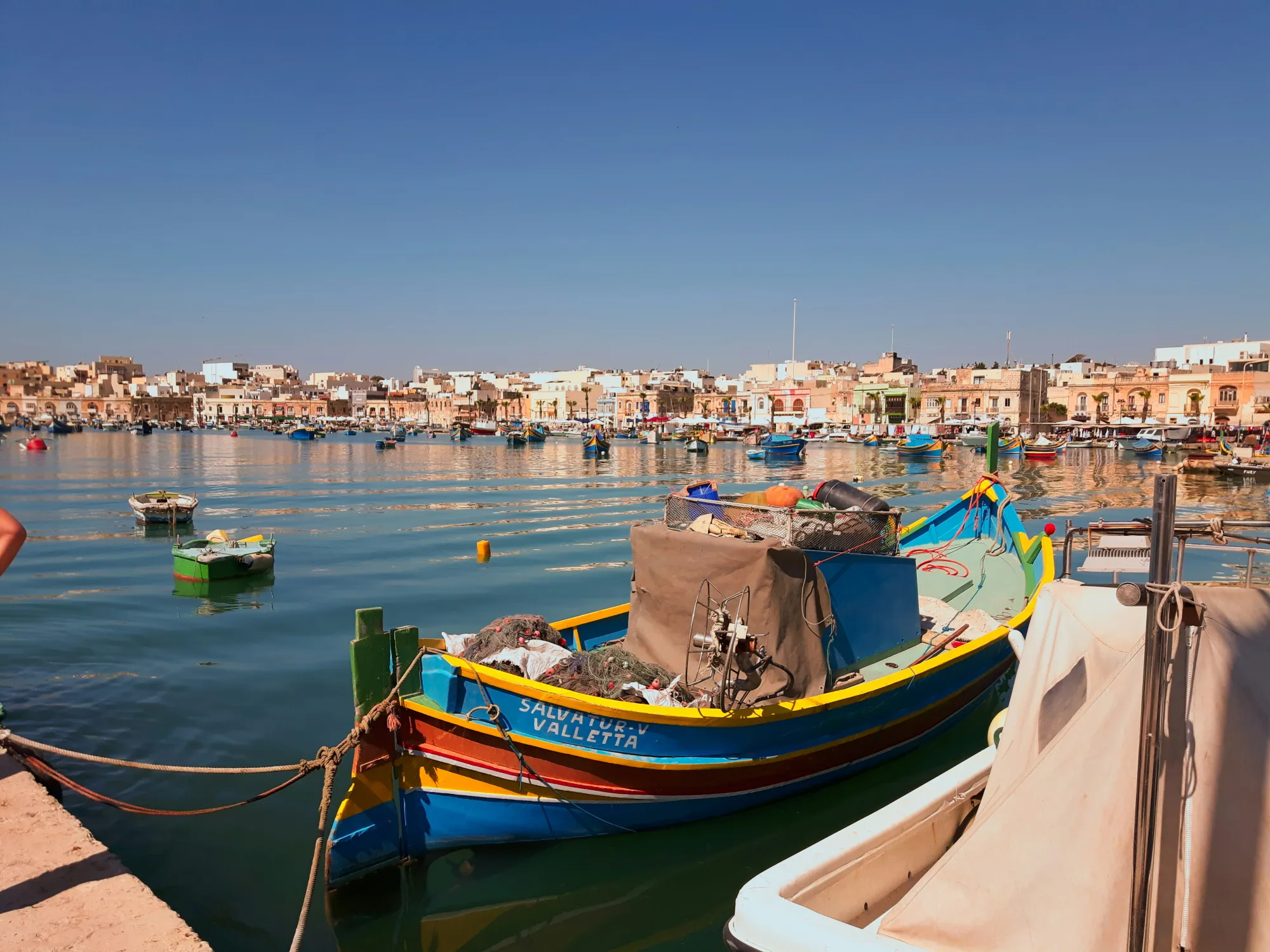
The village is home to Malta Film Studios, famous worldwide for its colossal outdoor water tanks, which production utilised for the film's most dangerous sea scenes. These deep-water tanks sit right on the edge of the Mediterranean Sea, and when filmed from a low angle, the water in the tank blends seamlessly with the natural sea and sky in the background. This helped Nolan create the illusion of being miles out in the open ocean while maintaining total environmental control.
To visit, travellers can take a water taxi or ferry from Valletta across the Grand Harbour to Birgu, then enjoy a 10-minute walk around the marina to Kalkara. Alternatively, buses from Valletta also run to the village.
6. Acrocorinth, Greece
Acrocorinth, the Acropolis of Corinth, is a rock fortress rising 575 meters above the ancient city of Corinth in the northeastern Peloponnese, Greece.
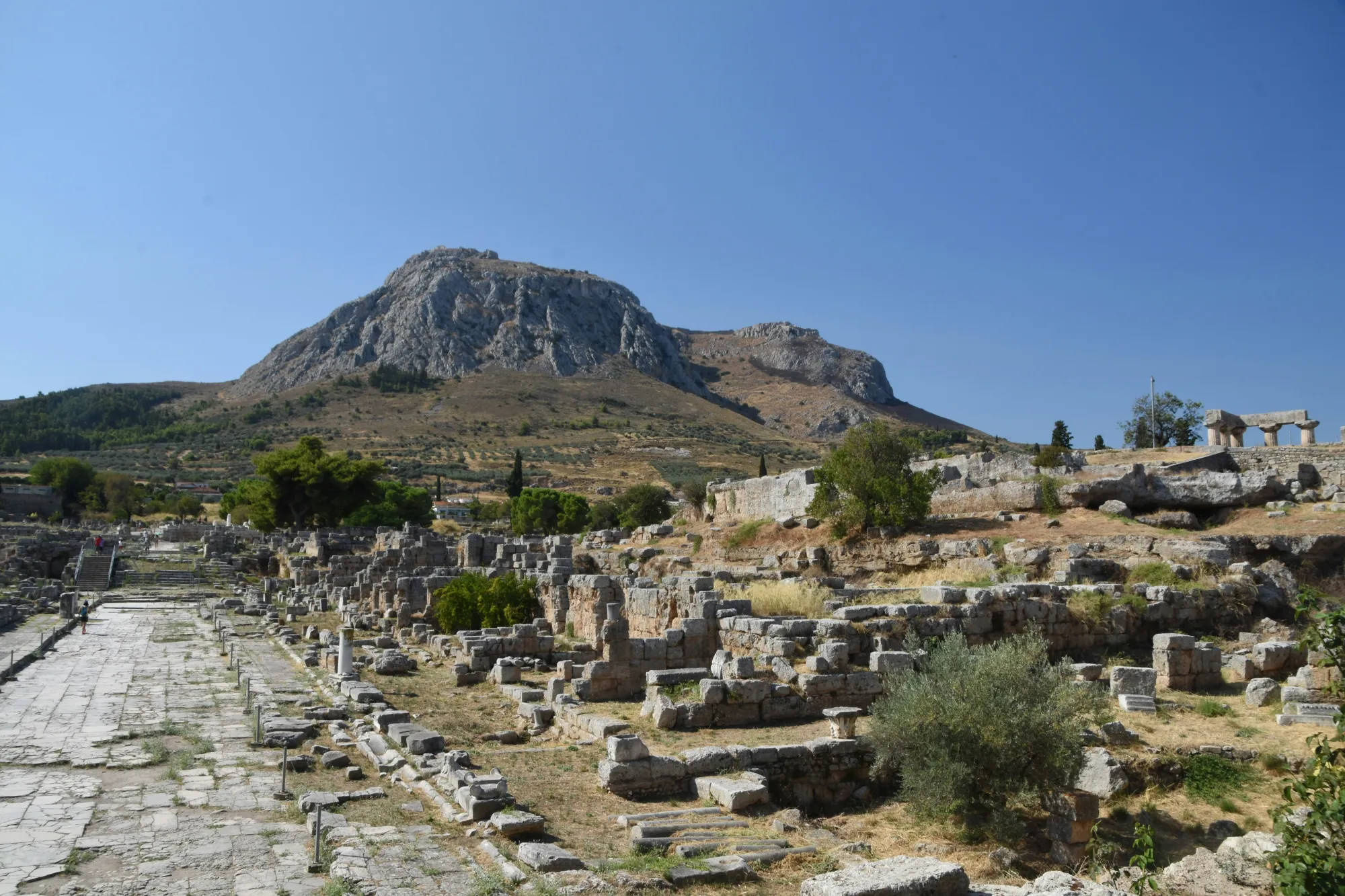
It was used to represent the ancient, high-altitude citadel of Mycenae, the seat of King Agamemnon. The outer stone gates and sprawling defensive walls were used for early flashback sequences showing the Greek high command assembling their fleet before setting sail for Troy, as well as Agamemnon’s eventual fateful return.
While Aït Benhaddou offered a warm, sun-bleached, reddish-clay desert look of Troy, Acrocorinth’s cold grey limestone walls and rugged green mountain slopes created a clear visual distinction between the Greek home territories and the distant Trojan coastline.
Despite its scale and historical importance, admission is completely free, and it receives a fraction of the crowds seen at the Acropolis in Athens. However, the summit is exposed with virtually no shade, so it is best to visit early in the morning or late in the afternoon.
7. Favignana Island, Italy
Favignana is the largest of the Aegadian Islands, located approximately 4.3 miles off the western coast of Sicily, near the port city of Trapani.
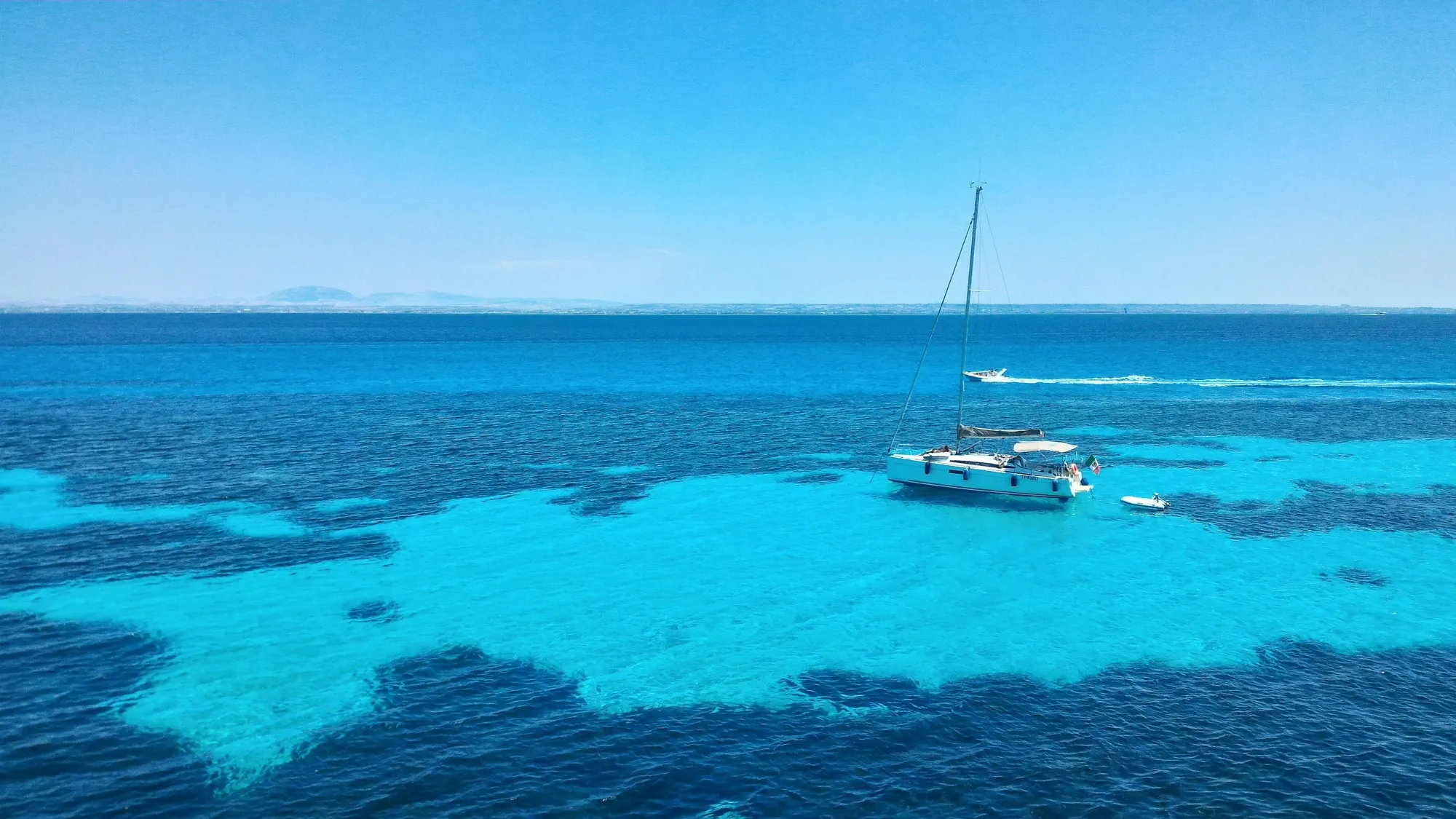
The island was transformed into Odysseus’ long-sought homeland of Ithaca. The hilltop fortress ruins of Castello di Santa Caterina, perched high on Monte Santa Caterina, served as the exterior of the Royal Palace of Ithaca. This is where Queen Penelope keeps the opportunistic suitors at bay and where Telemachus watches the horizon for his father's return.
The rugged limestone coves around Cala Rossa and Bue Marino were used for Odysseus’ disguised, solitary arrival on the shores of Ithaca after years at sea. Its dramatic landscape gave Ithaca an authentic feeling of an ancient island kingdom isolated from the mainland, visually emphasising why returning to this specific rock was Odysseus' ultimate obsession.
The waters around Favignana are among the clearest in Europe, making it a paradise for swimming and snorkelling. September to early October offer warm sea temperatures, lower accommodation rates, and peaceful beaches.
8. Dakhla, Morocco
Dakhla is a narrow, 25-mile-long sandy peninsula stretching into the Atlantic Ocean in the Western Sahara region. Perched between the Atlantic waters and a sheltered, turquoise lagoon, Dakhla sits where the golden sands of the Sahara Desert meet the ocean. It is world-renowned as a premier kitesurfing destination, an eco-tourism haven, and a serene desert-meets-sea escape.
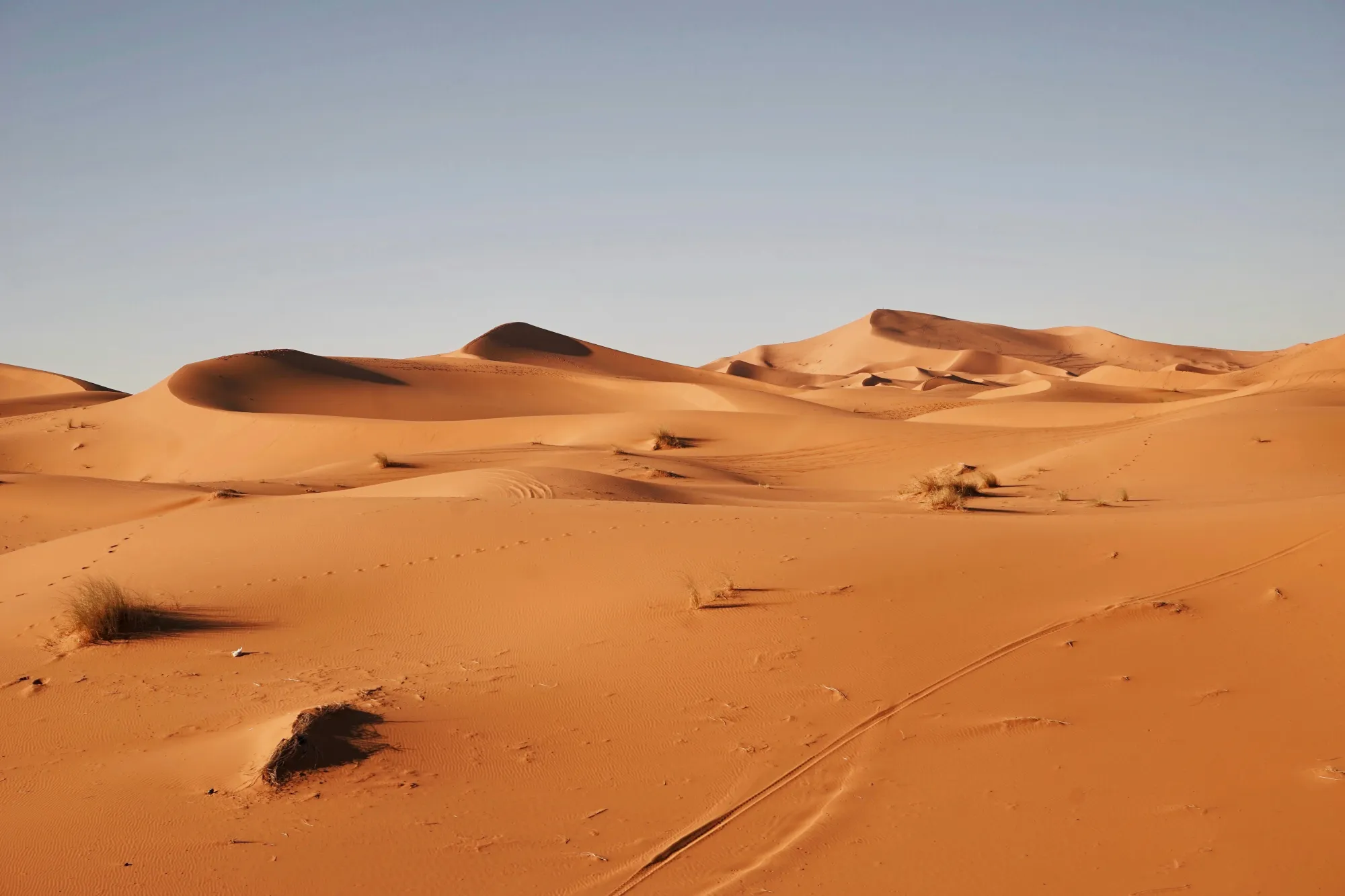
Its unique coastal dunes that spill directly into a vast sea lagoon served as the isolated, endless-looking island domain of the nymph Calypso, where Odysseus is trapped for seven years.
Unlike tropical island destinations, where weather can shift rapidly with cloud cover or heavy rainfall, Dakhla’s desert coastal environment offers practically guaranteed cloudless skies and consistently high sunlight day after day. This allowed the camera crew to maintain seamless continuity across long exterior sequences.
Book your next getaway with Iglu Cruise
If we've inspired you to visit some of these incredible destinations, then why not consider a cruise? We have plenty of incredible itineraries throughout the year, with no-fly options available from Southampton and other UK ports. Take a look at our latest cruise deals to see what we have available.